Kiwi IRC
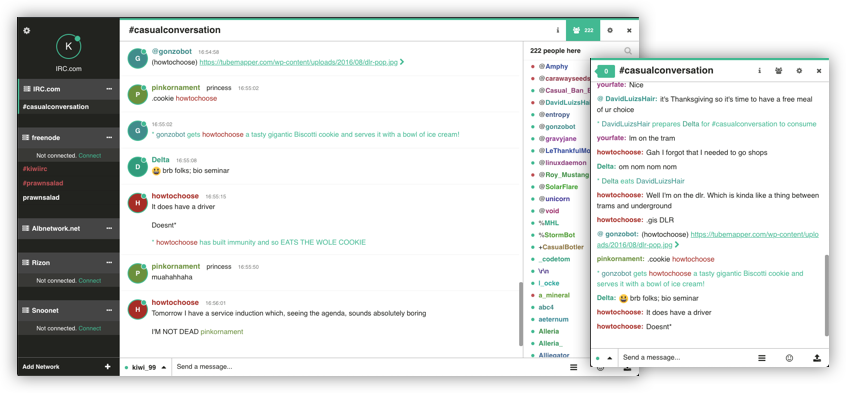
KiwiIRC makes Web IRC easy.
A hand-crafted IRC client that you can enjoy. Designed to be used easily and freely.
KiwiIRC makes Web IRC easy.
A hand-crafted IRC client that you can enjoy. Designed to be used easily and freely.
Released in 2013, Blue Is the Warmest Color La Vie d'Adèle – Chapitres 1 & 2
Looking back a decade later, Blue is the Warmest Color (2013) occupies a strange space. On one hand, it was a watershed moment for international cinema, proving that a three-hour French drama with no marketable stars could become a global phenomenon. It opened doors for other queer filmmakers like Céline Sciamma (Portrait of a Lady on Fire)—who ironically was originally attached to direct this film but left due to creative differences. blue is the warmest color 2013
The most devastating scene in the film isn’t the breakup. It is the "revenge" scene years later at a café, where Emma—now with a new, polished, successful partner—looks at Adèle with pity. Adèle still has tomato sauce on her chin. Emma has moved on to a more "appropriate" class. Kechiche uses food constantly: the desire to consume, to be consumed, and ultimately, to be indigestible to someone else. Released in 2013, Blue Is the Warmest Color
Discovery: Adèle initially struggles with her sexual identity after a dissatisfying encounter with a boy. It opened doors for other queer filmmakers like
The "deep feature" of Blue Is the Warmest Color is that it is not a love story about two people finding each other; it is a story about one person finding herself through the vessel of another. The blue was necessary to wake Adèle up, but the ultimate triumph of the film is that by the end, the blue is gone. The warmth remains, but the dependency has cooled, leaving behind a fully formed adult.
Released in 2013, Blue Is the Warmest Color La Vie d'Adèle ) is a landmark of contemporary French cinema that captures the raw, messy, and exhilarating nature of first love [1, 2]. Directed by Abdellatif Kechiche
. Kechiche keeps the camera inches from Adèle’s face, capturing every bite of pasta, every tear, and every breath. This "hyper-naturalism" creates a sense of voyeurism that makes the viewer a participant in Adèle’s emotional awakening. By the time she meets Emma, the color