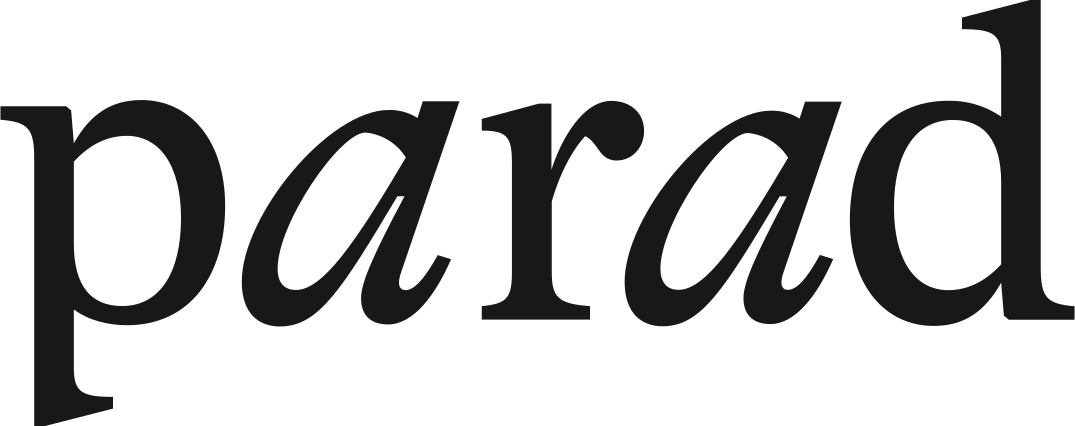









Psl Omyim Font
The Ultimate Guide to PSL Omyim Font: Enhancing Typography in Digital Design
Italic: A dynamic, leaning version that suggests forward-moving happiness. Psl Omyim Font
Q: Can I use the PSL Omyim Font for commercial projects? A: Yes, the PSL Omyim Font is licensed for commercial use. The Ultimate Guide to PSL Omyim Font: Enhancing
- File Size: 18.4 MB (standard OTF is ~200KB). This is because each glyph contains vector instructions that rewrite themselves during rasterization.
- Rendering Engine: Requires WebKit Nightly or a custom HarfBuzz shader. Chrome stable will render it as a mess of overlapping squares.
- Accessibility: Scores a 4/100 on WCAG contrast standards because the letters constantly shift their stroke weight. A bold ‘W’ in the middle of a sentence might suddenly become hairline thin if the previous word was “darkness.”
- License: The EULA forbids using Psl Omyim for “declarative statements, mathematical proofs, or any text that includes the phrase ‘as previously stated.’” The foundry has sued two tech blogs for using it in a listicle titled “10 Best Sans-Serifs.”
Title: The Whispering Text
The rain in Chiang Mai didn't wash the heat away; it just made the air heavy, like a wet wool blanket thrown over the city. File Size: 18
Conclusion
PSL Omyim is more than just a font; it is a tone of voice. In a digital world often dominated by cold, uniform Helvetica clones, PSL Omyim offers a handshake instead of a hand-off. It says "friendly," "sweet," and "human."
She double-clicked.
- Poetry: When used in a single line—the title of a poem, or the final line of a stanza—Psl Omyim acts as a visual footnote. The shifting kerning mimics the rhythm of human breath.
- Horror Titles: Film posters for psychological thrillers have adopted it. The fact that the word “alone” grows wider and more isolated the longer you look at it is a feature, not a bug.
- Coding Comments: A niche community of developers uses Psl Omyim exclusively for comments in their source code. They argue that because the font is hard to read, it forces the programmer to write fewer comments, making the code self-documenting. Senior engineers are split on whether this is genius or sabotage.